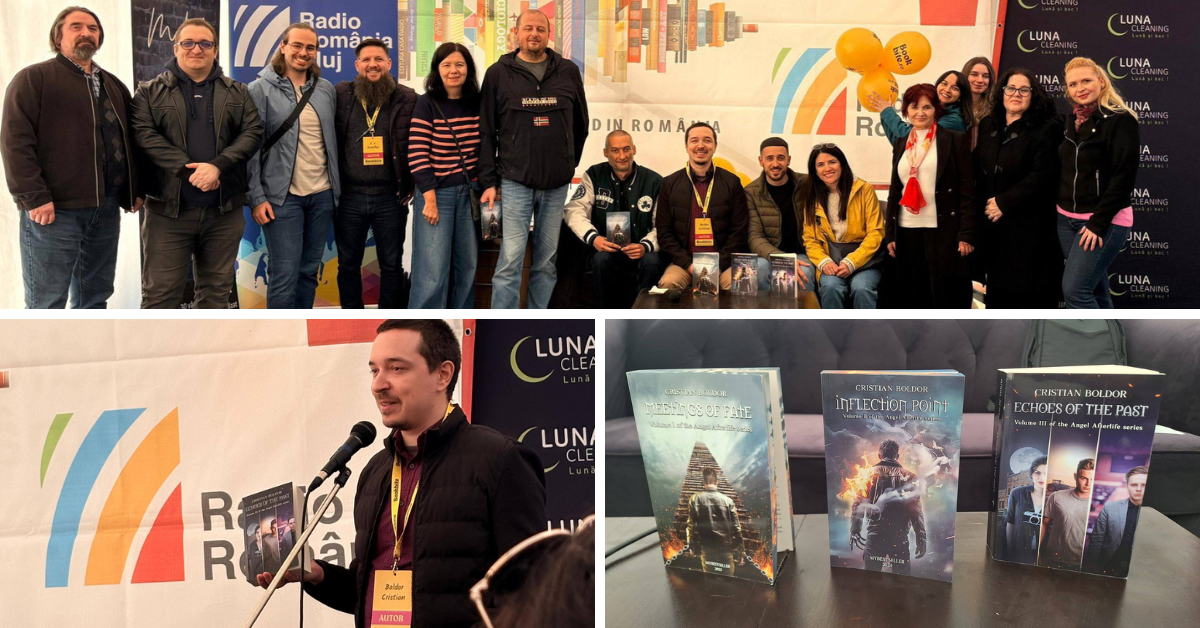
I recently had the opportunity to participate in the 2026 Gaudeamus Book Fair in Cluj-Napoca, where I showcased the novels in the “Angel Afterlife” fantasy series. Beyond simply presenting the books, the experience challenged me to connect directly with readers, test ideas in real time, and better understand what truly resonates with an audience. Moreover, my speech included a part about the power of human stories in the age of AI.
Here’s my Speech (translated from Romanian):
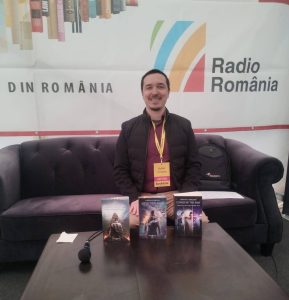
The “Angel Afterlife” book series fuses fantasy, paranormal, and personal development into a high-stakes narrative. Its universe is shaped around supernatural conflicts, yet compels characters to confront their limitations, traumas, and decisions. Far from escapist, this world reflects human experiences, with every internal or external struggle mirroring real-life dilemmas and inviting direct parallels.
The story unfolds like a rollercoaster, switching between vivid, cinematic action, drawing from anime influences in fight sequences, and deep, meaningful introspection. I introduce constant tension between pragmatism and emotion, strategic decisions, and vulnerability. I believe this duality enriches the characters and sustains a narrative rhythm that engages readers in the action and at a psychological level.
The advice about self-awareness and personal development is hidden in metaphors, inner monologues, dialogues, and the difficult choices of the characters. In addition, I built the relationships between the characters on real tensions like differences in values, emotional baggage, flaws, and moments of weakness. I did not idealize them so that people can relate easily.
My writing style can be described as a spiritual-psychological progression fantasy. I call it sy-help. It tells a story of inner awakening, disguised as supernatural fiction, in which emotional healing is not just an internal process, but becomes the real source of the characters’ supernatural powers. The classic example is this: you train for a long time and become stronger, sometimes you overcome a mental limit, or a mentor helps you. I use these stereotypes, but I also add something else: real advice for self-awareness and personal development from my own life experience.
My writing style, therefore, is a layered one: it functions simultaneously as entertainment, emotional experience, and deep reflection. The reader may enjoy the action on the surface, but if they look closer, they discover themes such as identity, meaning, and self-realization. I subtly integrate principles of personal development into dialogues, plot, and metaphors.
The characters are defined by psychological complexity. They are not just cool, but vulnerable and constantly at war with themselves. The inner conflicts are as intense as the physical ones, and themes of guilt, betrayal, purpose, and moral rehabilitation are explored.
A distinctive element is the cinematic style of the fights, inspired by anime: the confrontations are epic, complex or chaotic, but also symbolic. Power does not only mean strength, but also will, pain, and personal convictions. Each fight thus becomes a moment of transformation, not just action.
The universe of the series has a mythical and spiritual dimension where I talk about destiny, afterlife, conflict between light and darkness, and living life from the inside out. At the same time, the power systems are well defined and based on real progress, influenced by personal development for the heroes. For example, at the base of the heroes’ powers is the concept of chakras, mental strength, and the importance of emotions, to which will be added an architecture of self-awareness that I use in real life.
This style therefore oscillates between reflection, realism, and emotional chaos, because I want to offer authenticity and dynamism. For example, it could be an almost bureaucratic scene from the world of paranormal secret agencies, in the next scene I offer a moment of reflection for a demon, and then a battle like in anime between humans.
The central theme is transformation, especially about the importance of self-awareness and living life from the inside out. The characters don’t just act, they evolve. Pain, love, and difficulties become catalysts for growth, just like in real life. Essentially, I write self-help disguised as a supernatural story, offering insights and shifts in perspective that are naturally integrated into the narrative experience.
Through all of this, I create my own path: I write for readers who are looking for something deeper, more authentic, and more transformative than the classic fantasy genre, meaning a story that is not just entertaining, but that changes you for the better.
The Power of Human Stories in the Age of AI:
We live in an era where answers come faster than ever. We write a few words, and artificial intelligence completes the rest. The reasons are clear: we want efficiency, speed, and clarity. We want to get rid of repetitive work, tedious tasks, hours wasted on useless searches. That way, we gain time, right?
But in this rush for efficiency, an uncomfortable question arises: what are we losing?
There are real risks. The more we delegate thinking, the more we risk cognitive decline. We train our minds less, our problem-solving skills decrease, and over time we end up “stealing our own hat”. There is a risk of losing our skills: if we stop practicing, if we stop thinking critically, we become less competent. And AI, as useful as it is, has a subtle tendency to tell us what we want to hear and provide comfort. And comfort, in excess, is addictive.
You may have heard that phrase that is circulating online: “I want AI to wash my clothes so I can write and paint, not write and paint for me while I wash my clothes.” That’s where the essence of the problem lies: artificial intelligence is dehumanizing us and decreasing our skills.
Long before technology, before cities, before writing even, our ancestors gathered around the fire. There, in the flickering light, they told each other stories. About hunting, about dangers, about heroes, about mysteries, about death. It wasn’t just entertainment. It was for survival. It was a form of education. It was a way of connecting individuals. As we know, we are social beings and, on top of that, we are storytellers.
These mechanisms have been passed down from generation to generation. And today, science confirms what people have known instinctively since then: stories change our brains. They trigger emotions, activate multiple neural areas, help us retain information, and, most importantly, allow us to simulate life scenarios without experiencing them directly.
A story is not just a narrative thread. It is a meaningful experience. Think of a simple story: you see 3 workers working on a construction site. You ask the first one what he is doing, and he replies: “I am laying bricks one on top of the other.” You ask another worker, and he says: “I am building a wall to earn a living.” But the third one smiles at you and says: “I am building a cathedral.” Same work, but a completely different story. Meaning changes everything.
Then come childhood memories. Grandparents telling us bedtime stories. Parents who transformed simple events into life lessons. As children, we listened closely. Not just for the action, but for the emotion and connection. And fairy tales are more than just an adventure. From Hans Christian Andersen’s fairy tales to Jules Verne’s adventures, these types of stories are symbolic guides for life.
And yes, we continue as adults. We read stories, we just call them differently: novels, movies, TV series. “Beauty and the Beast” is about inner beauty. “Cinderella” is about hope and transformation.
Stories also live in our relationships. In the evenings with friends, when we laugh and say “do you remember when…?”. In intimate moments, when your partner comes home and says: “Let me tell you what happened to me at work today.” In the influencers we follow, not just for their “perfection”, but for their stories: struggles, failures, comebacks. You know the classic story: from rags to riches. Everybody loves a good story.
Why are human stories so powerful then? Because they are not perfect. Because they are real. Because they are based on personal truths, lived experiences, vulnerability… and, above all, soul.
Artificial intelligence can generate texts, imitate styles, and create impeccable structures. But it cannot live in your place. It cannot feel exactly what you felt in a moment that changed you. It cannot replace the authenticity of living. And that is precisely what makes the difference.
In a world where everything is becoming increasingly automated, your story is more valuable than ever.
Tell it because we need it to maintain our humanity. Our lives are stories.
And at the end of the day, people transform people through stories.
Closing Thoughts:
Stories only come alive when they’re experienced. If any of the above resonated with you, I invite you to discover my books for yourself. Get your copy and experience the journey firsthand.
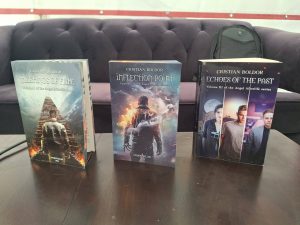
Book #1: Meetings of Fate
Book #2: Inflection Point
Book #3: Echoes of the Past (coming soon). The one I presented at the book fair was just a sample (work in progress).
Book #4 will be called “Unreal Tournaments”. I already have several hundred pages written.
And here’s a picture of me at the Bookbite stand with the organizers and fellow authors. It was a pleasure meeting them!

Thank you for reading till the end. Till next time 🙂