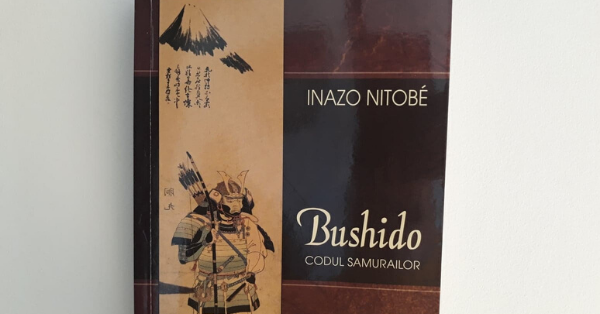
“A samurai’s sword is his soul,” it is said in the Bushido code. It’s no wonder that the person wielding that sword should uphold certain principles and virtues in his every day conduct.
I received this book in December 2019. I immediately knew it was going to be a treat. I’m always a fan of moral codes, principles, and the value one has as a person. You could say I identify pretty darn well with a samurai, except the way they „punished” themselves when dishonored or when they acted out of character.
Brushing that notion off, a samurai is only as good as the principles and virtues he upholds. The following 8 virtues are at the core of the samurai’s code of conduct also known as the Bushido code.
Justice
The most important principle for a samurai is justice (fairness). If there’s one thing the samurai hates, it’s injustice and heinous acts of character.
Courage
The samurai and their offspring lived a spartan lifestyle in a sense. Since children they would endure the harshest of challenges in order to develop courage and endurance.
Compassion
Compassion is a virtue of the human soul, perhaps the greatest one. Samurais had mercy for the weak or for their fallen foes.
Politeness
A short peak into Japanese society and you’ll see politeness embedded everywhere. It’s in their nature to exhibit this virtue with both foreigners and their kin.
Honesty
Honesty could be seen as being part of the realm of the divine. It’s of great importance to the Japanese people. A samurai’s word was considered absolute and never went back on it.
Honor
Honor was an absolute must for the samurai. It resembled the taste of glory or happiness of the highest order. Although sacred for them, it sometimes led to extremes and zealous behavior that ended in bloodshed.
Devotion
The samurais were totally devoted to their superiors, either the feudal lord or the master who enrolled them in his service. If need be, the samurai would take his life should he fail to convince his master about the errors of his ways.
Self-control
As part of the Japanese stoicism, self-control and/or discipline was highly valued. For the samurai, if it meant to push back his tears or not ask for help when he needed it, then they would gladly do it, and with stoicism on top of that.
In conclusion, I highly recommend this book. It’s not the easiest of reads but the way the author paints his arguments is mighty fine. It dwells on philosophy, history, connection to other cultures, and features some stories to better convey the message.
If you’re on a roll and want to read more book reviews, do check out another one of mine at this link.
Have a great day! 🙂
Cristian